
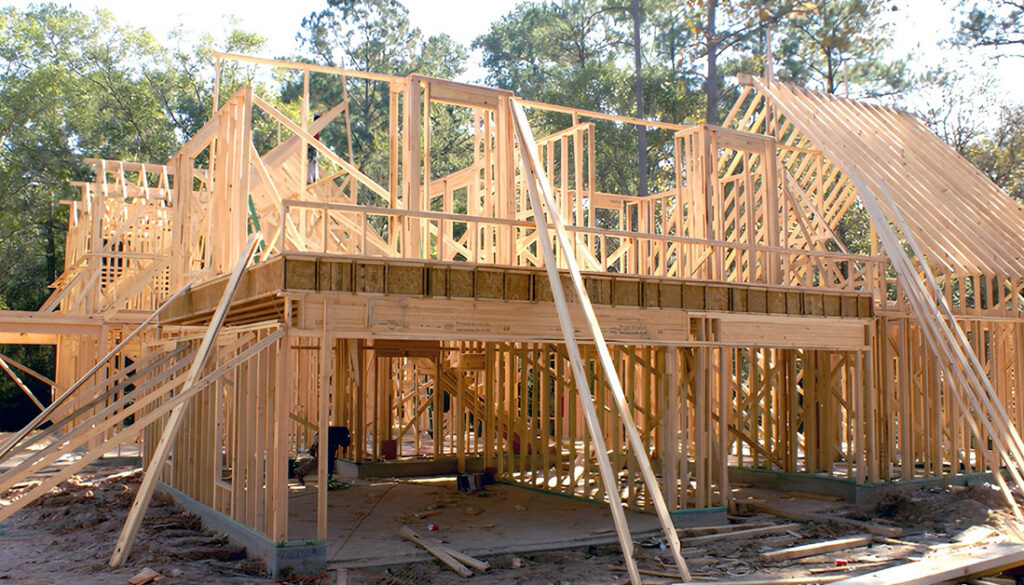
5 Major Drivers of Custom Home Construction Costs in Louisiana
Nobody enjoys vague answers about what something costs, and that’s especially true for a large project, like a new home build or renovation. So, this post is designed to help people understand why custom home construction costs vary as much as they do, and why any builder who gives you a firm price per square foot before seeing your lot, your plans, and the current state of the materials market is likely just telling you what they think you want to hear.
This post isn’t going to quote you numbers. It will hopefully do something more useful: explain the layers of factors that actually drive the cost of building or renovating a home in Southeast Louisiana, so you can go into conversations with builders with the right frame of reference.
I spent the early part of my career in accounting and finance before starting West Custom Homes. That background shapes how I approach every project’s budget. What follows is the general framework I use when I’m talking to a client about what their custom home construction costs are actually going to look like, and why.
Global Factors: The Materials Market Doesn’t Always Follow Your Build Schedule
The first layer of custom home construction costs is one nobody in the industry controls: the global commodities market. Lumber, steel, concrete, copper, and finish materials are all traded internationally. Their prices are set by supply and demand forces that have nothing to do with what’s happening on your lot in Covington or Mandeville. When those markets shift, construction pricing shifts with them, sometimes quickly.
Lumber & Engineered Wood
Framing lumber is one of the more volatile inputs in residential construction. The price can move significantly within a single year, driven by sawmill production rates, export demand from overseas markets, shipping capacity, and weather events that affect timber supply. Engineered products like LVL beams, I-joists, and OSB sheathing follow similar patterns.
A custom home with complex rooflines, open-span framing, and structural beam work uses more of these materials than a straightforward production build. When the lumber market is running high, that complexity shows up in the budget. Builders who are locked into a price they quoted months ago are usually managing that risk somehow. I’d encourage you to ask how.
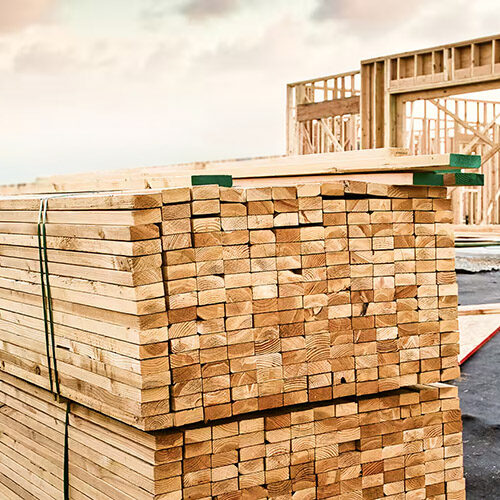
NAHB Housing Economics tracks material cost indices monthly. This is a useful reference for understanding where the market is at any given time.
Steel and Concrete
Not every custom home uses structural steel, but plenty do. Open floor plans with long clear spans, custom staircases, and certain architectural features often require it. Steel pricing tracks global industrial demand and production capacity.
Concrete goes into virtually every project. Foundations, slabs, driveways, retaining walls, pool decks if there is one. In Southeast Louisiana, where soil conditions frequently require engineered foundation systems rather than simple slab-on-grade, concrete quantities tend to be higher than they’d be in a more stable-soil market. Ready-mix delivery pricing also responds to fuel costs, which have their own cycle.
Copper and Electrical Materials
Copper is priced on the London Metal Exchange and moves with global industrial output. It’s in every wire run in your home, in plumbing fixtures, and in HVAC equipment. That exposure matters when copper prices are elevated.
Appliances, Fixtures, and Imported Finishes
High-end appliances, custom cabinetry components, and imported tile or stone are subject to international shipping dynamics on top of whatever commodity price fluctuations apply. When ocean freight capacity tightens or port congestion extends lead times, the landed cost of these products goes up. So do the delays. Homeowners who have their heart set on a specific Italian tile or a particular appliance package need to plan around real supply chain timelines.
National Factors: Industry Pressures That Run Across Every Market
Some of the factors behind custom home construction costs aren’t specific to Southeast Louisiana. They’re baked into residential construction across the country and show up in every builder’s overhead regardless of geography.
The Skilled Trades Workforce Shortage
The U.S. construction industry has been dealing with a shrinking pool of skilled tradespeople for years. Fewer young workers are entering apprenticeship programs for electrical, plumbing, framing, and concrete work than are retiring or leaving the trades. That gap has been getting wider, not narrower.
Each project we build is different, the plans are more complex, and the tradespeople need to be able to problem-solve in the field. That requires genuinely skilled workers, and genuinely skilled workers cost more when there aren’t enough of them.
Bureau of Labor Statistics: Construction Industry Employment – national data on construction labor trends.
Building Code Updates
The International Residential Code and the International Energy Conservation Code both operate on update cycles. Each new edition typically adds requirements around insulation, air sealing, window performance, and mechanical ventilation. States and parishes adopt these editions on their own schedules, and each adoption raises the cost floor for building a code-compliant home.
Louisiana adopts building codes at the state level, with local jurisdictions handling enforcement. Which code edition applies to your build, and whether your parish has any local amendments on top of the state adoption, affects your project’s baseline requirements from the first set of plans.
ICC (International Code Council) – context on national building code update cycles.
Insurance Costs Embedded in Builder Overhead
Builder’s risk insurance, general liability, and workers’ compensation are all embedded in a reputable builder’s pricing. Construction insurance costs have been rising nationally for several years. In coastal markets like Southeast Louisiana, they’re higher than the inland baseline. When you see a significantly lower bid from a contractor, one of the things worth asking about is what they’re carrying for coverage and what their Louisiana contractor license status is. A properly licensed and insured builder has real costs in that overhead that someone operating without adequate coverage doesn’t.
Regional Factors: Why Southeast Louisiana Is Its Own Animal
In my experience, the regional piece is where custom home construction costs in Southeast Louisiana diverge most sharply from national averages. Builders who are new to this market often underestimate how much the conditions here differ from other parts of the country.
Soil Conditions and Foundation Engineering
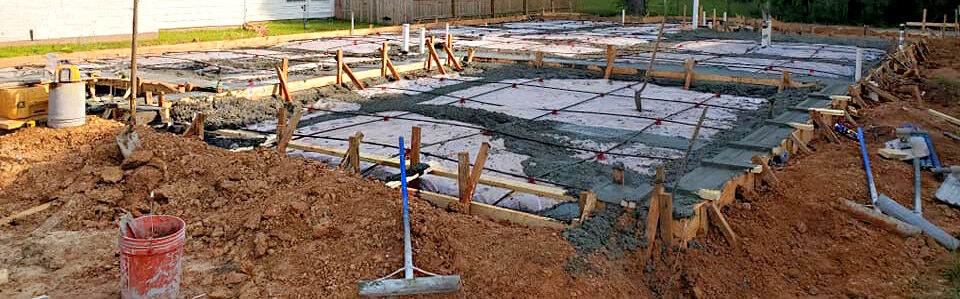
Louisiana’s soil is largely alluvial. It was deposited over centuries by the Mississippi River and its distributaries, and it’s soft, compressible, and in many areas still settling. The bearing capacity of these soils is lower than what builders work with in upland markets, and foundation design has to account for that difference.
Pier-and-beam systems, driven piling, and engineered slab designs are common in this region precisely because simple slab-on-grade often isn’t appropriate. The cost difference between a standard poured slab in a stable-soil market and a properly engineered foundation system in Southeast Louisiana can be substantial.
LSU AgCenter – Louisiana Soils Information: regional soils data from a Louisiana-specific authority.
Flood Zones and Elevation Requirements
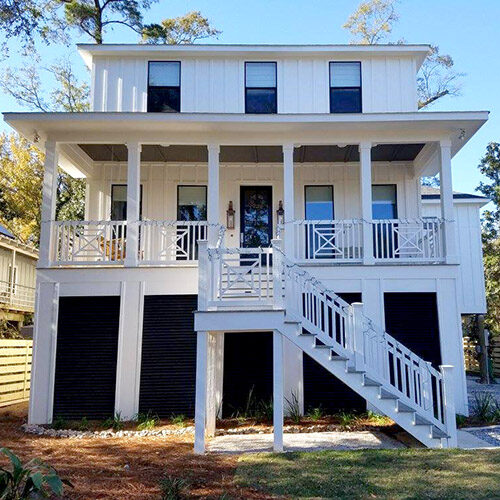
FEMA’s flood zone maps divide Southeast Louisiana into a patchwork of Base Flood Elevations that determine how high a home must be built above natural grade. In large portions of both the Northshore and Southshore, homes must meet minimum elevation requirements that can put the finished floor several feet above the ground.
Building elevated costs money. The foundation system is taller, the entry stairs or ramp are longer, garage configurations change, and the landscaping at the grade transition needs to be handled thoughtfully. These aren’t optional costs in affected zones; they’re required. And they vary parcel by parcel. A lot in an AE zone in Metairie has a different BFE than a lot in an X zone in Covington. Comparing those two budgets against each other as if they’re equivalent doesn’t work.
FEMA Flood Map Service Center – any parcel’s flood zone designation can be looked up here before a purchase is made.
Wind Load Standards and Coastal Exposure
Louisiana’s hurricane exposure means residential construction has to meet higher wind load requirements than most of the continental U.S. Roof-to-wall connections, sheathing fastening schedules, window and door specifications, and attic ventilation all have to comply with wind exposure category requirements that simply don’t apply the same way in interior markets.
Building to these standards produces a more resilient home. It also costs more than a comparable home built in a lower-exposure market. Homeowners who are using published national cost averages as a benchmark should understand that many of those averages are pulled from markets where wind load requirements are meaningfully different.
Permitting Across Multiple Parish Systems
Southeast Louisiana doesn’t have one permitting system. It has several. St. Tammany Parish, which covers the Northshore communities of Mandeville, Covington, Madisonville, and Abita Springs, runs its own permit office with its own fee schedule and inspection process. Jefferson Parish and Orleans Parish on the Southshore operate under separate systems with their own timelines and requirements.
Permitting timelines affect project schedules, and longer schedules cost money. Construction loan interest keeps accruing. Subcontractors may not
be available when a delayed permit finally clears. Material prices quoted at bid time may have changed. Knowing the local permit process, having working relationships with the inspectors, and submitting a complete package the first time matters more than most clients realize until they’ve watched a project sit waiting for a resubmittal. It’s one of the practical advantages of building with someone who’s been doing this specifically in St. Tammany and the surrounding parishes.
St. Tammany Parish: Building Permits and Inspections – the parish permit office for Northshore builds.
Jefferson Parish: Building Permits – the Jefferson parish permit office for the cities of Harahan, Kenner, Metairie, and beyond.
City of New Orleans: Department of Safety and Permits – the permit office for builds in New Orleans.
Local Subcontractor Availability
Custom home construction in Southeast Louisiana depends on skilled local tradespeople who know the regional conditions: HVAC contractors familiar with extreme humidity, electricians experienced with elevated construction, concrete crews that understand local soil behavior, finish carpenters who can execute work at the spec level a custom home requires.
When the regional construction market is active, that pool of qualified subcontractors gets thin. Commercial work, post-storm rebuilding activity, and surges in residential development all compete for the same workers. The subcontractors we work with on every West Custom Homes project have typically been in our rotation for years. That continuity affects custom home construction costs in ways that don’t show up in any estimating tool: scheduling reliability, trust on job site problem-solving, and a mutual understanding of the quality standard we hold.
Project-Level Factors: The Choices That Are Yours
Global markets and regional conditions set the backdrop for custom home construction costs. What happens within that backdrop depends on the specific decisions made for a given project, and most of those decisions are up to the homeowner.
What’s on the Lot Before You Build
A finished lot in a subdivision with utilities at the curb and a clear, level building site is a fundamentally different starting point than a raw wooded lot with a grade change, no sewer hookup, and a drainage feature that needs engineering to bridge. Site preparation covers clearing, grading, utility service connections, driveway construction, and fill if it’s needed. Those costs vary by lot, not by home size.
On the Northshore, lots along the Tchefuncte River corridor or in communities like Bedico Creek, in Madisonville, may carry environmental setbacks or drainage considerations that standard subdivision lots don’t. On the Southshore, infill lots in established neighborhoods often require demolishing an existing structure before building begins. Understanding what a lot will actually cost to develop is part of the total project budget.
Square Footage and Structural Complexity
Larger homes cost more. That part’s obvious. What’s less obvious is how much complexity drives cost independently of size. Two homes with identical square footage can have very different budgets depending on the floor plan geometry, ceiling heights, roofline complexity, structural requirements, and the number of exterior corners and roof valleys involved.
A 3,500-square-foot home with a simple rectangular footprint, standard ceiling heights, and a basic gable roof is a different project than a 3,500-square-foot home with a complex articulated footprint, vaulted spaces, multiple ceiling heights, and a custom staircase. Custom home construction is where those design choices live. Cost per square foot becomes a less useful unit of comparison when the scope varies this much between two projects of the same size.
Specification Level Throughout
Custom homes are built to a specification, and that specification touches every room and every system. Flooring, cabinetry, countertops, plumbing fixtures, windows, roofing materials, insulation systems: each category has a range from serviceable to exceptional. Where a homeowner lands across all of those categories in aggregate determines a meaningful portion of the total project cost.
Walking through the budget by category with your builder, rather than looking at a single project total, usually produces better decisions. When you can see what’s driving the number and where you have flexibility, it’s easier to make trade-offs that reflect your actual priorities.
Lots With Special Conditions
In Mandeville & across the region, waterfront properties, lots adjacent to wetlands, and parcels that fall under Corps of Engineers jurisdiction all carry additional steps in the permit and design process. Some require specific environmental documentation. Some have setback requirements that affect where on the lot a home can be placed. Equipment access during construction may need to be planned around site constraints that a standard subdivision lot doesn’t have.
None of this makes those projects impossible. It makes them projects where the planning has to start early and where the costs of those additional steps need to be understood upfront rather than discovered mid-process.
What Custom Home Construction Costs Mean for Your Planning Process
Understanding that custom home construction costs are shaped by global markets, national industry conditions, regional requirements, and project-specific choices should change how you approach the early stages of planning your project.
A few things that matter more than most people realize:
- Your land budget and your build budget are one budget. What you spend on the lot, and what it costs to prepare it for construction, affects how much remains for the home. Thinking about these as separate decisions usually leads to surprises.
- Get me involved before the plans are finalized. Waiting until architectural plans are complete to get pricing means you’ve already made the most expensive decisions. A builder involved during design can give real-time cost feedback before it’s too late to change anything. I cover this in detail in our 11-step building process. It’s how we catch cost decisions before they’re locked in.
- Know your parcel’s specific conditions before you design. Flood zone designation, soil conditions, wind exposure category, and parish permitting requirements are parcel-specific. I can walk you through what those conditions look like for any address in our service area before you’re committed to anything.
- Budget for contingency from the start. Custom construction uncovers things that weren’t visible from the surface. Soil conditions, utility runs, and design refinements all generate cost adjustments during the build. Responsible budgeting accounts for that from day one.
- Verify that your builder is licensed. Louisiana requires an active license through the Louisiana State Licensing Board for Contractors for residential contractors. Licensing is searchable on their site. It takes two minutes and it matters.
I build custom homes in Mandeville, Covington, Madisonville, Abita Springs, and across the Northshore, as well as in Harahan, Kenner, Metairie, and throughout Greater New Orleans. Every project I take on gets my direct involvement from the first land conversation through the final walkthrough. That’s how we operate.
If you’re trying to get a realistic idea about custom home construction costs for your specific situation, reach out to me. I’ll be happy to have an honest conversation about what you’re trying to do and whether we’re a good fit to help you do it.
